
Key Takeaways
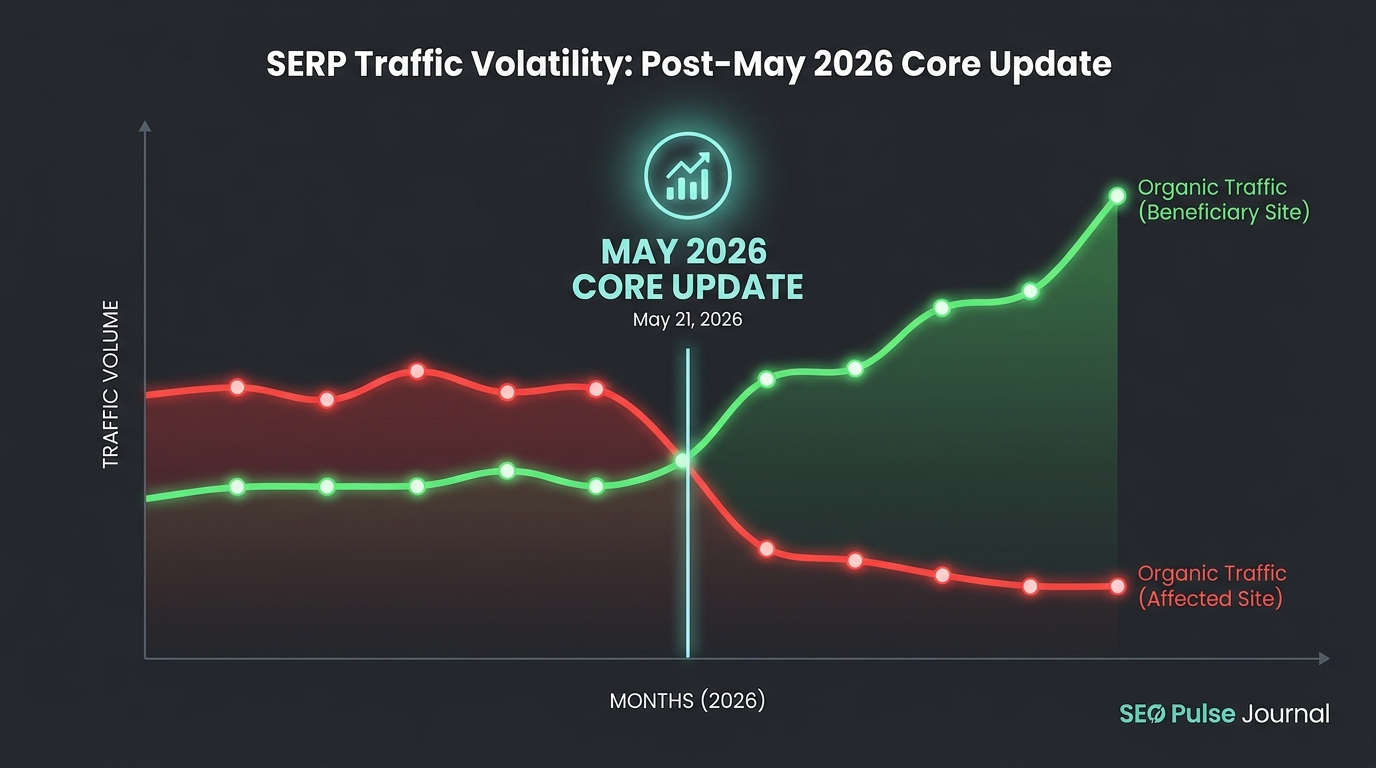
- Google’s May 2026 Core Update began rolling out on May 21, 2026, with the full rollout expected to take up to two weeks, putting final stabilization around June 4, 2026.
- This is not a penalty. Losing ground after a core update does not mean your site violated a rule. It means Google changed what it considers worth ranking, and your content no longer meets the new threshold.
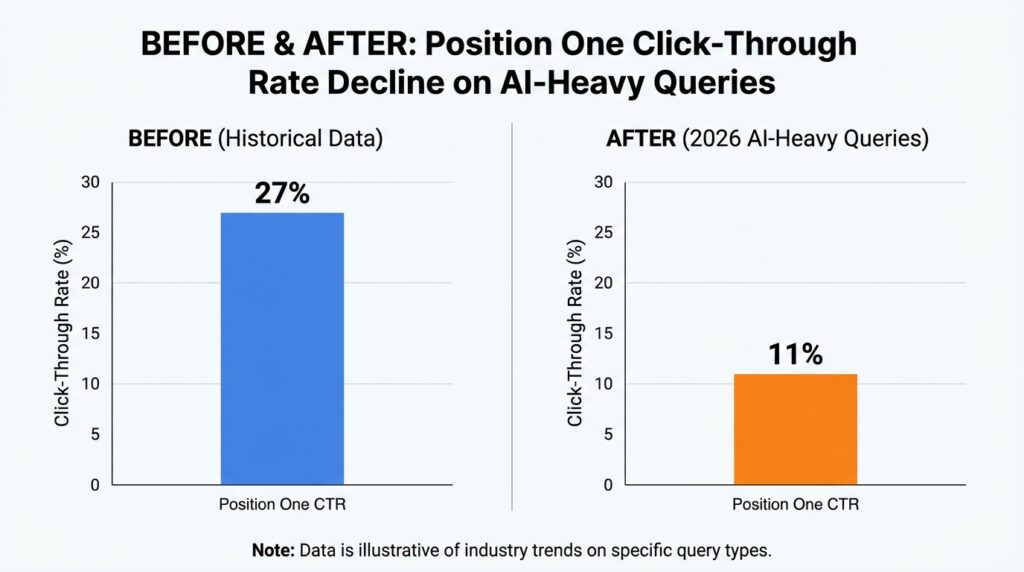
- Research tracking post-update click behavior shows that top organic positions are generating click-through rates as low as 11% on queries where AI Overviews are active, compared to 27% in previous years. Rankings and traffic are now two metrics that must be tracked independently.
- The update hits hardest on sites that scaled content without adding genuine expertise: thin AI-assisted articles, unfocused topical coverage, and content that reorganizes what other sites already published without contributing anything new.
- The practical goal for SEO in 2026 has shifted. The target is no longer just earning a top blue link. It is becoming the reference source that Google’s AI synthesizes from.
Table of Contents
Introduction
Traffic declines showing up in your analytics after May 21 are real, they are widespread, and they have a clear cause.
Few algorithm shifts in recent memory have generated as much conversation among SEO professionals as what landed in the final week of May 2026. And the coverage problem with most Google May 2026 core update analysis is the tendency to treat it as a standalone event disconnected from everything that preceded it.
It is not.
Looking at this update purely through a rankings lens misses the bigger shift it represents. The algorithm is now calibrated for a product that resolves questions directly rather than directing users toward sources. And the Google algorithm update 2026 is the ranking system catching up with a search product that has already been fundamentally rebuilt around AI.
This guide breaks down what actually changed, which sites got hit and why, and what a real recovery path looks like for publishers and marketers navigating post-update traffic drops.
What a Core Update Actually Is and Why This One Sits Differently
When Google releases a core update, it is recalibrating the entire ranking system, not targeting specific sites or content types the way a spam update does.
A core update rewrites the scoring rubric Google uses to decide which pages deserve visibility for a given query. Losing ground after one does not indicate a penalty or a violation. It means the rubric shifted, and pages that previously met the standard no longer do under the new criteria.
A useful way to think about it: the pages competing for your rankings did not necessarily get better. Google’s definition of what belongs at the top of results changed around them.
What makes the Google search ranking signals in May 2026 different from earlier core updates is the context they sit inside. The velocity of change inside Google Search since April 2026 has outpaced anything seen in the previous twelve months. Google held its biggest I/O event in years, pushed its first official guide on AI search behavior, and added AI visibility reporting to Search Console, all within the same period this core update landed. This is not an isolated algorithm refresh. It is the ranking infrastructure aligning with a search product that has already moved.
What the May 2026 Core Update Actually Targeted
Few post-update conversations settle on the right diagnosis. The patterns emerging from SEO ranking drops May 2026 data are consistent enough now to identify clearly.
Scaled Content Without Genuine Expertise
Most post-update conversation centers on this pattern, and most of the conclusions drawn from it miss the point.
The production method is irrelevant to Google’s evaluation. The metric that matters to Google’s system is what a page contributes to a reader’s understanding, not how it was built. Content that reorganizes what other sites already published, without contributing original perspective, genuine analysis, or first-hand insight, is precisely what this update is calibrated to demote.
For any team using AI tools in their content workflow, this is where the EEAT Google 2026 framework applies most directly. The AI can handle structure and language. The expertise signal has to come from the human author whose name and credentials are attached to the piece.
Unfocused Topical Coverage Penalized
Sites that built content libraries without a clear subject focus are seeing their rankings fragment. The pattern is consistent: a site covering AI tools, travel destinations, fitness routines, and investment advice in equal measure is sending a signal that it has no particular area of authority.
This is what practitioners call topical authority, and it has become one of the defining ranking variables of 2026. Topical depth has been a ranking factor for years, but the May 2026 update appears to have weighted it more heavily than any previous cycle. Broad coverage without depth is a visibility liability, not a traffic advantage.
The EEAT Bar Moved Further Than Most Sites Are Ready For
Demonstrating that you know a topic is no longer sufficient in 2026.
The experience component of EEAT Google 2026 has been upgraded in weight. Google wants evidence that content was produced by someone who has genuinely engaged with the subject matter, not just researched it. First-person observations, named authors with verifiable credentials, original data, and opinions grounded in actual practice are the signals being rewarded.
This is a harder bar than keyword optimization or technical SEO. It cannot be patched through a site audit. It requires a genuine editorial philosophy about who is writing, why they are qualified, and what they are adding to the conversation.
Rankings and Traffic Are Now Two Completely Different Metrics
This is the single most practically important shift in the AI Overviews SEO impact conversation, and it is still being underestimated.
Research tracking click behavior shows that top organic positions are generating click-through rates as low as 11% on queries where AI Overviews are active, compared to 27% in earlier measurement periods. A page can hold a number one position and still receive dramatically fewer clicks than the same position delivered two years ago, because a growing share of users receive their answer directly from Google before ever reaching the organic results.
If you are measuring SEO performance through Google Analytics traffic alone, the picture you are getting is incomplete. A page that dropped from 8,000 monthly visits to 3,200 may not have changed ranking positions at all. It may simply have entered AI Overview territory where most users no longer need to click through.
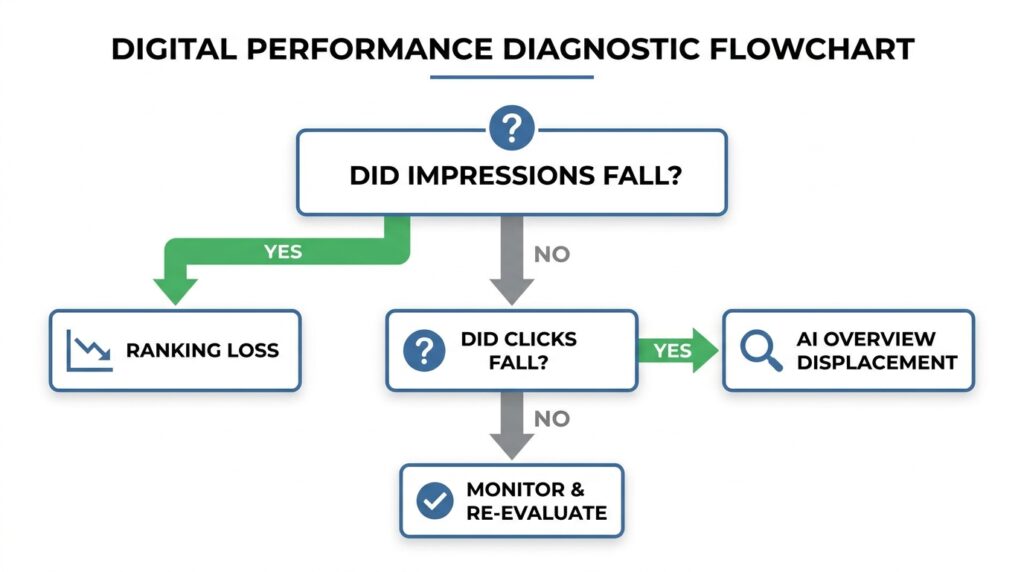
This is why separating impression data from click data in Google Search Console is now a mandatory diagnostic step, not an optional one. Stable impressions with falling clicks indicate AI Overview displacement. Falling impressions with falling clicks indicate a genuine organic traffic drop 2026 tied to ranking loss. Those two situations require completely different responses.
Becoming a Citation Source Is the New Ranking Goal
The counterpart to declining click-through rates is the citation opportunity. When AI Overviews pull from your content, Google has effectively endorsed that page as authoritative enough to anchor a synthesized answer.
The target has shifted from earning the top blue link to becoming the reference Google’s AI synthesizes from. Publishers who built their credibility on named authors, primary research, and verifiable subject expertise are consistently climbing in post-update rankings, and they are the ones appearing most frequently as AI Overview citations in their respective topic areas.
Content quality SEO 2026 is no longer primarily about on-page optimization. It is about building a content infrastructure that looks, to Google’s system, like something produced by genuine experts rather than content machinery.
Who Won and Who Lost After May 21
The post-update settlement is still in progress, but the directional patterns are clear.
Sites That Lost Ground
Any publisher that treated Google helpful content update criteria as a compliance checklist rather than an editorial standard is showing the consequences. Specific patterns among sites that declined:
Sites that published AI-assisted articles without human editorial oversight or author-level expertise attached. The volume may have been high, the optimization solid, and the topics relevant. But without genuine expertise differentiated from every other page covering the same ground, the ranking case was not strong enough under the new criteria.
Sites that expanded into adjacent content areas beyond their core expertise to capture additional search volume. The breadth came at the cost of the depth signals Google now weights more heavily.
Sites with weak author infrastructure, meaning no named authors, no linked credentials, no demonstrated expertise visible to Google’s crawlers and evaluators.
Sites That Gained Ground
Publishers who treated intent-driven SEO 2026 as a foundational principle rather than a trend saw gains. This includes:
Specialists with narrow topic focus and comprehensive coverage of their specific area. A site that has covered AI chip development from fifteen different angles carries more topical authority signals than a site that covered it twice among hundreds of unrelated topics.
Multimedia-rich content is performing better across categories. Visual content, structured data markup, and pages that serve a query through multiple formats rather than text alone are benefiting from the update’s apparent weighting of user experience signals alongside content quality.
Community and expert-driven platforms where content originates from people with demonstrated first-hand knowledge of the subject. Original data, case studies, and first-person experience remain the most durable content types through any core update cycle.
How to Diagnose Whether You Were Actually Hit
The instinct to start fixing immediately is understandable after a traffic drop. It usually leads to changes that address the wrong problem.
Confirming whether the May 2026 Google core update recovery process applies to your site requires specific diagnostic steps before any remediation work begins.
Open Google Search Console and compare performance data from the two weeks before May 21 against the two weeks after. Look at impressions, average position, and clicks as three separate data series, not as a combined traffic picture. The relationship between those three numbers tells you what type of problem you are dealing with.
Identify which specific pages lost the most impressions. Look for patterns across those pages. Are the losses concentrated in a specific content category? A specific author? A specific content format or length? Pattern recognition at the page level is faster and more accurate than guessing at site-level causes.
Do not implement major changes before the rollout completes. Google’s Search Status Dashboard will show the official completion. Rankings continue fluctuating through the rollout window, and changes made during active rollout are difficult to evaluate accurately.
What a Real Recovery Strategy Looks Like
Google core update recovery after a content quality update does not come from technical fixes. It comes from content-level changes that alter how Google’s quality systems evaluate the site.
Start With Your Weakest Content
Pull the pages with the largest impression drops. For each one, answer honestly: does this page offer something a reader genuinely cannot get from the pages already ranking above it? If the answer is no, the page needs either significant improvement or consolidation into a stronger piece.
Leaving underperforming thin content live can suppress the overall quality signal Google assigns to the domain. Removing or substantially upgrading those pages is typically more effective than adding new content while the weak pages remain.
Build Real Author Signals
The experience layer of EEAT is assessed partly by how clearly a page connects to a credible human author. Author bios with verifiable credentials, active social profiles linking to published work, author schema markup, and evidence of genuine expertise in the topic being covered all contribute to this signal.
For AInewsnest.com specifically, publishing under real author personas with genuine backgrounds, the Nitesh and Jatin author profiles being the foundation of that architecture, is exactly the right infrastructure for building content quality SEO 2026 authority at the domain level over time.
Go Deeper Before Going Broader
The sites recovering fastest from this update are not the ones publishing more content. They are the ones publishing more specific, more expert content in the areas where they already have topical signals built.
A site covering AI tools that doubles down on comprehensive, differentiated coverage of AI chip architecture, AI advertising platforms, and developer tooling builds a topical authority signal that compounds. The same site expanding into cybersecurity or cryptocurrency to chase volume dissipates that signal.
Where Google Search Is Heading After This Update
How people search has shifted fundamentally: queries are longer, more conversational, and a growing share of them are entered into AI-powered interfaces rather than a traditional search box. The May 2026 Google algorithm update 2026 is the ranking system responding to that behavioral reality.
Google’s ranking systems have become markedly more capable of distinguishing between a page that contains relevant terms and one that actually resolves a reader’s question. That distinction will only sharpen with subsequent updates. The sites that align their content strategy with genuine reader utility rather than search optimization mechanics are building on ground that each update cycle makes more stable, not less.
The publishers best positioned for the second half of 2026 are the ones treating this update as directional information rather than a crisis to manage. The direction is consistent: real expertise, real authors, real depth, real value. Nothing about that standard changes between now and the next core update.
Conclusion
The Google May 2026 core update is a quality enforcement event, not an arbitrary reshuffling. Sites that lost ground were almost always holding positions that their content quality did not fully support. The update corrected that misalignment.
For publishers building the right way, with genuine expertise, original insight, named authors, and intent-driven SEO 2026 as an actual editorial standard, this update moves the competitive landscape in their favor. The content that was earning rankings primarily through volume and optimization now has less ground to stand on. The content earning rankings through genuine authority has more.
Monitor Search Console through the official rollout completion. Diagnose accurately before making changes. And treat the recovery process as a chance to build a content foundation that holds through every update after this one, not just the current cycle.

Your blog has become my go-to source for inspiration and motivation I am so grateful for the valuable content you provide
I always look forward to reading your posts, they never fail to brighten my day and educate me in some way Thank you!
Wow, this blogger is seriously impressive!