
Introduction
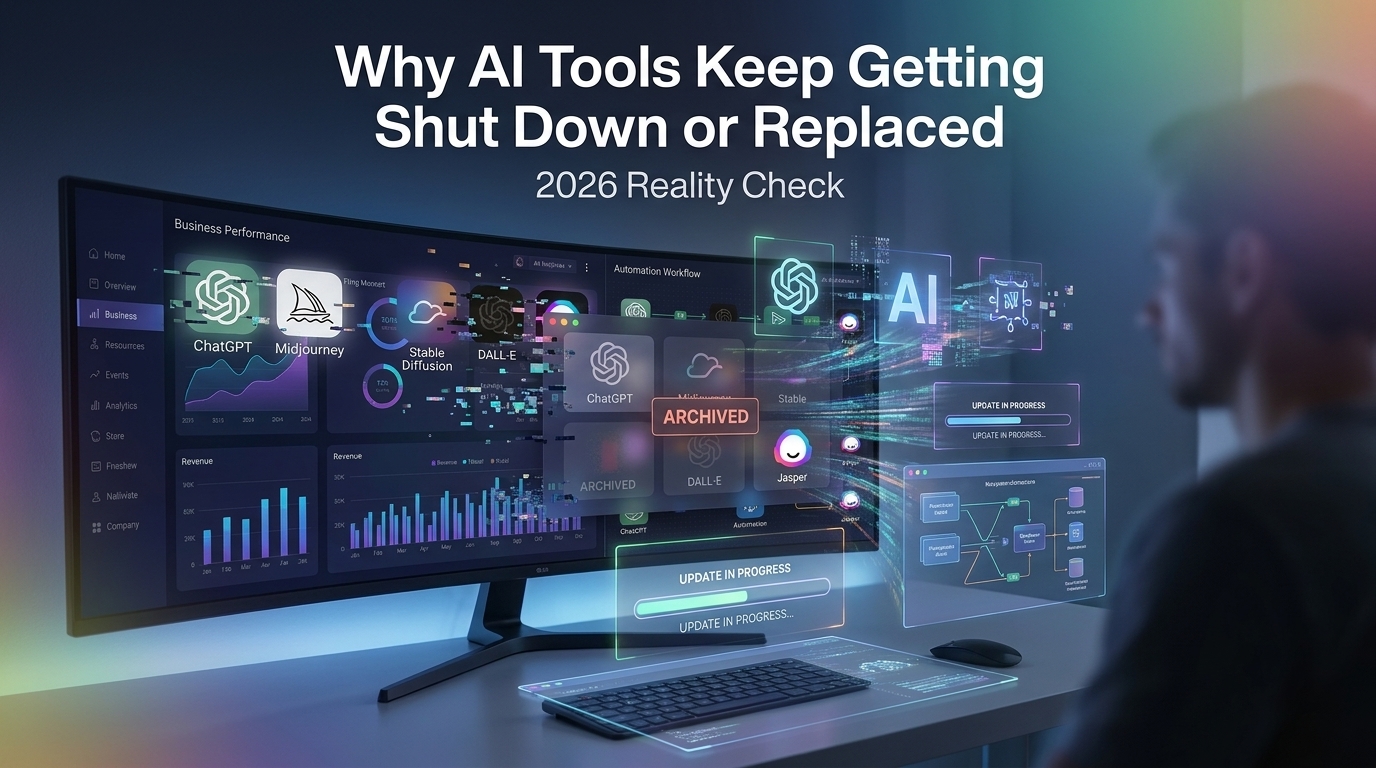
The AI industry moves so fast that a tool considered “game-changing” today can disappear within months.
Over the last year alone, we have seen multiple AI tools shutting down, getting acquired, or quietly losing relevance. Some never survive beyond the hype cycle. Others get replaced by larger platforms almost overnight.
For users, this feels confusing. One month everyone is recommending a new AI app. The next month, the tool is discontinued, merged into another platform, or forgotten entirely.
But this is not happening because AI is failing.
It is happening because the AI market is becoming more competitive, more expensive, and far more demanding than most people realize.
Many founders underestimate:
- Infrastructure costs
- AI market competition
- User retention challenges
- Long-term scalability
This is why so many AI tools get replaced before they ever become sustainable businesses.
In this article, I will break down the real reasons behind:
- Why AI startups fail
- Why AI software shutdowns are increasing
- Why some AI companies survive while others disappear
More importantly, we will look at what these changes mean for businesses, creators, and marketers relying on AI tools every day.
In short: AI tools keep getting shut down or replaced because the market evolves extremely fast, operating costs are high, and many companies fail to build sustainable business models.
In many cases, larger platforms like ChatGPT absorb features from smaller products, making standalone tools less valuable. This rapid shift is becoming one of the biggest AI tool trends in 2026.
Table of Contents
The AI Industry Moves Too Fast
One of the biggest reasons behind AI tools shutting down is simple: the industry evolves faster than most startups can adapt.
In traditional software markets, products may stay relevant for years before major disruption happens. AI works differently.
New models, features, and capabilities launch constantly. What feels innovative today can become a standard feature next month.
The Problem With Short-Term Innovation
Many AI startups launch with one standout feature:
- AI writing
- AI image generation
- AI video editing
- AI meeting summaries
The problem is that these features are becoming commoditized very quickly.
For example:
- A standalone AI copywriting tool may gain traction
- Then ChatGPT adds similar functionality
- Suddenly the smaller product loses its unique advantage
This is one of the biggest reasons AI tools keep getting replaced so quickly.
The “Feature vs Platform” Problem
Most smaller AI startups are building features.
Large companies are building ecosystems.
That difference matters.
Platforms like:
- ChatGPT
- Google Gemini
- Microsoft Copilot
are evolving into full productivity environments.
Users increasingly prefer:
- One platform
- One subscription
- Integrated workflows
instead of paying for multiple disconnected tools.
This shift is accelerating the lifecycle of many discontinued AI tools.
AI Tool Trends in 2026 Are Changing Fast
A major shift happening right now is consolidation.
Earlier AI adoption looked like this:
- One tool for writing
- One for SEO
- One for design
- One for automation
Now users want:
- Unified platforms
- AI ecosystems
- Multi-purpose assistants
This trend is reshaping the entire future of AI tools.
Why This Creates Massive Pressure on Startups
Most AI startups are competing in markets where:
- User expectations change quickly
- Technology evolves weekly
- Customer loyalty is low
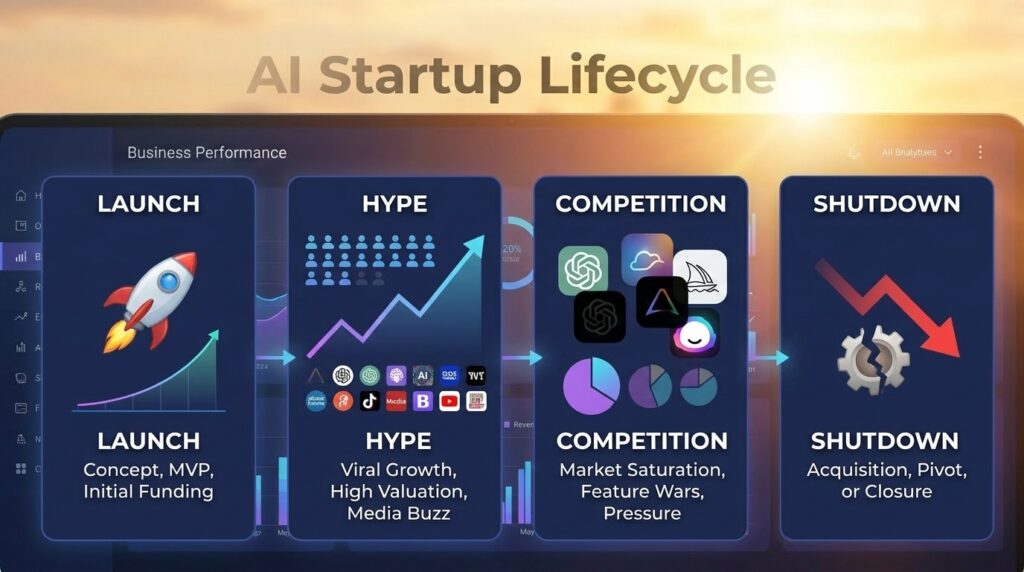
That creates a dangerous cycle:
- A tool gains hype
- Users try it
- Competitors launch alternatives
- Bigger platforms absorb the feature
- The startup struggles to survive
This pattern is becoming increasingly common across the AI industry.
Reality Check
A lot of people assume:
“If an AI tool shuts down, the product failed.”
That is not always true.
Sometimes:
- The technology was strong
- The product worked well
- Users liked it
But the economics, scalability, or competition made long-term survival difficult.
That is the hidden reality behind many modern AI software shutdowns.
Most AI Tools Don’t Have a Real Moat
One of the biggest hidden problems in the AI industry is that many tools are not truly unique.
At first glance, hundreds of AI products look different:
- AI writers
- AI design tools
- AI SEO assistants
- AI research apps
But underneath, many of them rely on the same foundational AI models.
That creates a major issue:
“If everyone is using similar technology, differentiation becomes extremely difficult.”
The AI Wrapper Problem
This is one of the biggest reasons why AI startups fail.
A large number of modern AI companies are essentially “wrappers” built on top of existing AI systems like:
- OpenAI models
- Anthropic models
- Google AI infrastructure
In simple terms:
- They add a cleaner interface
- Build a workflow around it
- Package it as a standalone product
The problem comes when the original AI provider improves its own platform.
Suddenly:
- The wrapper loses uniqueness
- Users move back to the main platform
- The startup struggles to justify pricing
This is becoming one of the most common reasons behind AI tools getting replaced.
Why Users Are Starting to Consolidate Tools
A year ago, many people used separate tools for:
- Writing
- SEO
- Image generation
- Automation
- Research
Now users are asking:
“Why pay for five AI tools when one platform can handle most tasks?”
This shift is changing the entire AI tools lifecycle.
Users increasingly want:
- Fewer subscriptions
- Simpler workflows
- Centralized platforms
That is why larger ecosystems continue gaining power while smaller standalone apps struggle.
Infrastructure Costs Are Brutal
This is the part most users never see.
AI is expensive to operate. Extremely expensive.
Behind every AI tool are:
- GPU servers
- Cloud infrastructure
- Model training costs
- Inference costs
- Scaling expenses
For AI startups, these costs become overwhelming very quickly.
Why AI Video Tools Struggle Financially
Text-based AI is already costly.
Video AI is on another level entirely.
Generating realistic AI videos requires enormous computing power.
This is one reason why several advanced AI video projects faced sustainability issues, including some highly discussed AI software shutdown stories in 2026.
Even when users love the product, profitability becomes difficult.
Growth Does Not Always Mean Profitability
This is where many people misunderstand AI businesses.
An AI startup may have:
- Millions of users
- Viral attention
- Huge social media buzz
But still lose money every month.
Why?
Because growth alone does not solve:
- Infrastructure costs
- Customer acquisition costs
- Retention problems
This is one reason many heavily hyped AI tools shutting down surprised users.
AI Market Competition Is Becoming Aggressive
The AI market is no longer a small startup space.
Now the competition includes:
- OpenAI
- Microsoft
- Anthropic
- Meta
These companies have:
- Massive infrastructure
- Deep research teams
- Huge capital
Smaller startups cannot compete on raw scale.
The “Feature Absorption” Problem
Here is what often happens:
- A startup creates a unique AI feature
- The product gains attention
- Larger platforms notice demand
- The feature gets integrated into bigger ecosystems
At that point, users start asking:
“Why use a separate tool?”
This is one of the biggest reasons behind the growing number of discontinued AI tools.
Why Building AI Products Is Harder Than It Looks
From the outside, AI startups seem easy to build.
But long-term survival requires:
- Strong differentiation
- Sustainable pricing
- Loyal users
- Real business value
Without those things, even impressive products can disappear quickly.
Reality Check: Most AI Products Are Competing on Speed, Not Loyalty
This is the deeper issue shaping the future of AI tools.
Most users are still experimenting:
- Trying new tools constantly
- Switching platforms quickly
- Chasing better outputs
That means many AI companies are competing in unstable markets where customer loyalty is weak.
And when loyalty is weak:
- Replacement becomes easy
- Shutdowns become more common
- AI tools lifecycle becomes shorter
Users Are Experiencing AI Tool Fatigue
Another major reason behind AI tools getting replaced is something most companies underestimated: user fatigue.
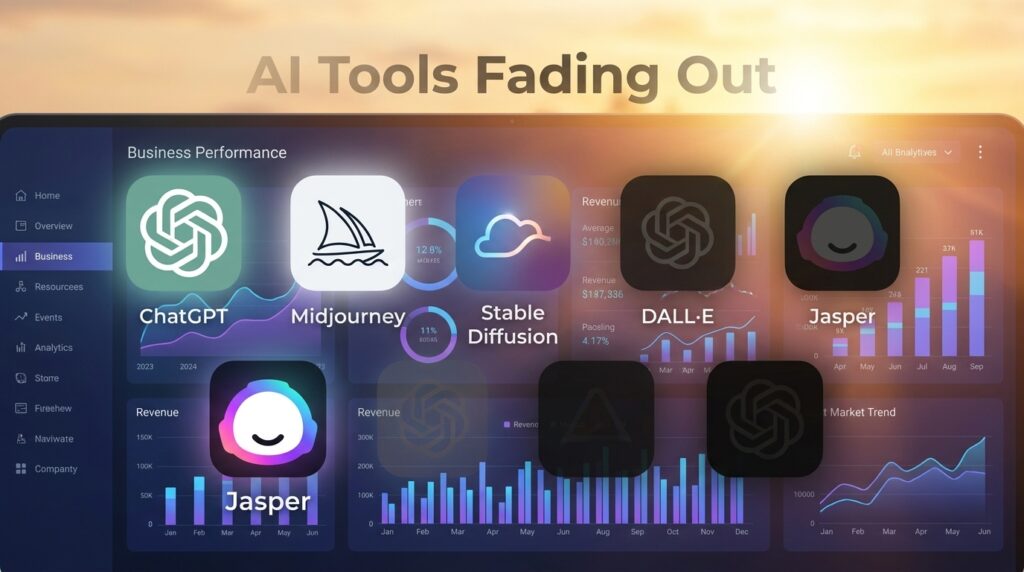
Over the last two years, users have been flooded with:
- New AI apps every week
- Endless subscriptions
- Similar features across platforms
- Constant workflow changes
At first, people were excited to try everything.
Now the mindset is changing.
Users increasingly want:
- Stable platforms
- Reliable ecosystems
- Fewer tools that do more
This shift is reshaping the entire AI tools lifecycle.
The Subscription Problem
A lot of users now pay for:
- ChatGPT
- Design tools
- SEO tools
- Automation tools
- AI writing tools
At some point, people start asking:
“Which tools do I actually need?”
That question is becoming dangerous for smaller AI startups.
Because when budgets tighten:
- Standalone tools are often the first to go
- Multi-purpose platforms survive
This is one reason many smaller AI tools shutting down are struggling to retain users long-term.
Real Examples of AI Tools That Struggled or Disappeared
The AI market is filled with examples of tools that gained attention quickly but struggled to maintain momentum.
Sora by OpenAI
Sora generated massive excitement because of its realistic AI video capabilities.
But the discussion around the project also highlighted a larger industry problem:
- High infrastructure costs
- Scalability challenges
- Sustainability concerns
This became one of the most talked-about examples in recent AI tool trends in 2026.
Humane AI Pin
Humane positioned its AI Pin as a replacement for smartphones.
The product attracted huge media attention but faced:
- Usability issues
- Market resistance
- Questions around real-world value
This reflects a common issue in the AI market:
Innovation alone does not guarantee adoption.
AI Writing Tool Saturation
Many smaller AI writing tools exploded in popularity early in the AI boom.
Then larger platforms integrated:
- Writing
- Research
- Editing
- Workflow automation
into one ecosystem.
As a result, many standalone writing apps lost visibility almost overnight.
This is becoming one of the clearest examples of how AI tools get replaced when differentiation disappears.
What Successful AI Companies Are Doing Differently
While many tools struggle, some AI companies continue growing rapidly.
The difference is not just technology. It is positioning.
They Solve Real Workflow Problems
Successful AI companies focus less on flashy demos and more on:
- Productivity
- Automation
- Business efficiency
- Workflow integration
That creates long-term value.
They Build Ecosystems, Not Features
This is critical.
The companies surviving long-term are building:
- Platforms
- Integrations
- Connected workflows
instead of isolated AI features.
That is why ecosystems like:
- ChatGPT
- Microsoft Copilot
- Google Gemini
continue expanding.
They Focus on Business ROI
The strongest AI companies are solving problems tied directly to:
- Revenue
- Time savings
- Operational efficiency
This makes them harder to replace.
What This Means for Businesses and Creators
The AI market is entering a more mature phase.
That means businesses and creators need to think differently about AI adoption.
For Businesses
Do not build critical systems around unstable tools.
Instead:
- Prioritize reliable ecosystems
- Choose tools with strong long-term support
- Focus on workflow integration
For Creators and Marketers
Avoid depending entirely on one platform.
The AI landscape changes too quickly for that.
Instead:
- Build adaptable workflows
- Focus on transferable skills
- Use AI as leverage, not dependency
For Founders
The era of simple “AI wrappers” is becoming harder.
The market now rewards:
- Strong differentiation
- Real utility
- Sustainable business models
This is one of the biggest lessons behind why AI startups fail.
Trends: Future of AI Tools
The next phase of AI will likely look very different from the current landscape.
Here is where things are heading:
1. AI Platform Consolidation
Fewer standalone tools, larger ecosystems
2. Rise of AI Agents
AI systems handling complete workflows instead of isolated tasks
3. Deeper Integration
AI becoming part of:
- Operating systems
- Browsers
- Work software
- Business tools
4. Shift From Hype to Sustainability
The market is moving from:
- Viral demos
to - Reliable business value
This transition will define the future of AI tools.
Conclusion
AI tools are not disappearing because AI is failing.
They are disappearing because the industry is evolving faster than most companies can adapt.
The current wave of:
- AI software shutdowns
- AI tools getting replaced
- Startup failures
is part of a larger market correction.
The AI companies that survive long-term will likely be the ones that:
- Solve real problems
- Integrate deeply into workflows
- Deliver measurable business value
In the end, the winners in AI will not be the loudest tools.
They will be the tools businesses and users cannot operate without.