
Introduction
AI is no longer just about chatbots answering questions. It is moving toward something more powerful and more useful in daily life. That is where AI agents come in.
You might have heard the term recently, especially with tools becoming more autonomous. But for many people, it still feels confusing or too technical.
So let’s simplify it.
In this guide, you will learn what AI agents are, how they work, real examples you can relate to, and why they are becoming the next big thing in artificial intelligence. If you are new to AI, this will make everything clear.
Quick Answer
In short, AI agents are software programs that can think, decide, and take actions on their own to complete tasks. Instead of just answering questions like a chatbot, AI agents can perform tasks step by step with minimal human input.
Table of Contents
Core Explanation: What Are AI Agents?
Think of an AI agent like a digital assistant that does not just respond but actually works for you.
A basic chatbot waits for your input and gives an answer. An AI agent, on the other hand, can:
- Understand a goal
- Break it into steps
- Take action
- Adjust based on results
For example, if you tell an AI agent, “Plan my trip,” it can:
- Search flights
- Compare prices
- Suggest hotels
- Create an itinerary
All without you guiding every step.
That is the key difference.
How Do AI Agents Work?
To understand how AI agents work, you do not need a technical background. Just think of it as a simple loop.
Step 1: Observe
The agent gathers information from its environment. This could be user input, data, or online sources.
Step 2: Think
It processes that information using AI models to decide what to do next.
Step 3: Act
It takes action, such as sending an email, generating content, or searching for information.
Step 4: Learn and Adjust
It evaluates results and improves future actions.
This cycle repeats until the task is complete.
That is what makes AI agents powerful. They are not just reactive, they are proactive.
Types of AI Agents (Explained Simply)
There are different types of AI agents, but we will keep it simple.
1. Reactive Agents
These respond to immediate inputs. They do not remember past actions.
Example: Basic chatbots
2. Goal-Based Agents
These work toward a specific goal.
Example: Planning a trip or completing a task
3. Learning Agents
These improve over time by learning from data.
Example: Recommendation systems
4. General Purpose AI Agents
These are more advanced and can handle multiple types of tasks.
Example: AI tools that can write, research, automate, and more
These are becoming the most popular in 2026.
AI Agents Examples (Real-Life Use Cases)
Understanding AI agents examples makes everything clearer.
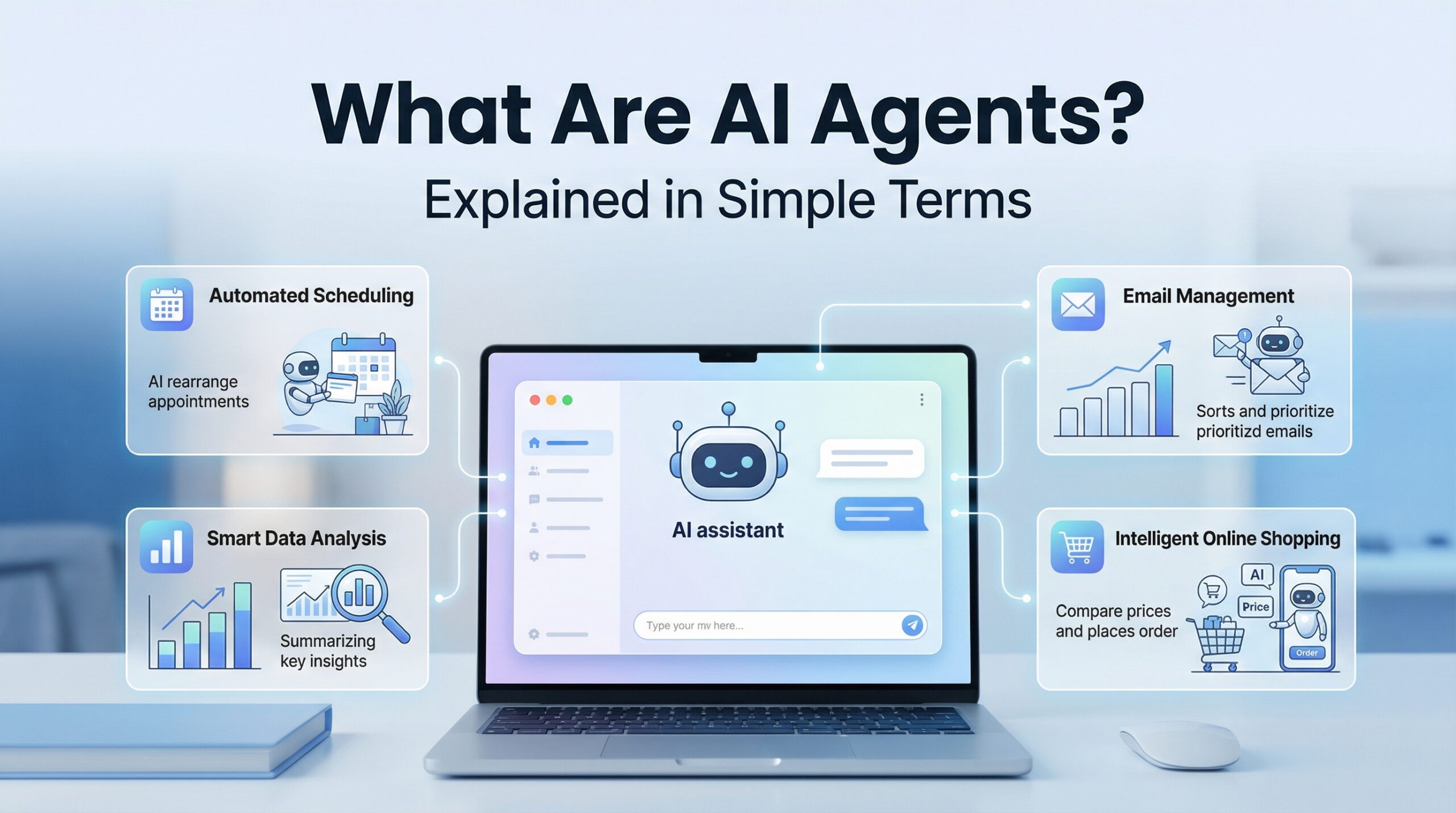
Shopping Assistant
An AI agent can compare products, track prices, and suggest the best deals.
Email Automation
It can read emails, draft replies, and even send them for you.
Business Workflows
Companies use AI agents to automate customer support, data analysis, and marketing tasks.
Personal Productivity
An agent can manage your calendar, schedule meetings, and remind you of tasks.
These are not future concepts. Many of these use cases already exist today.
AI Agents vs Chatbots
This is where most confusion happens.
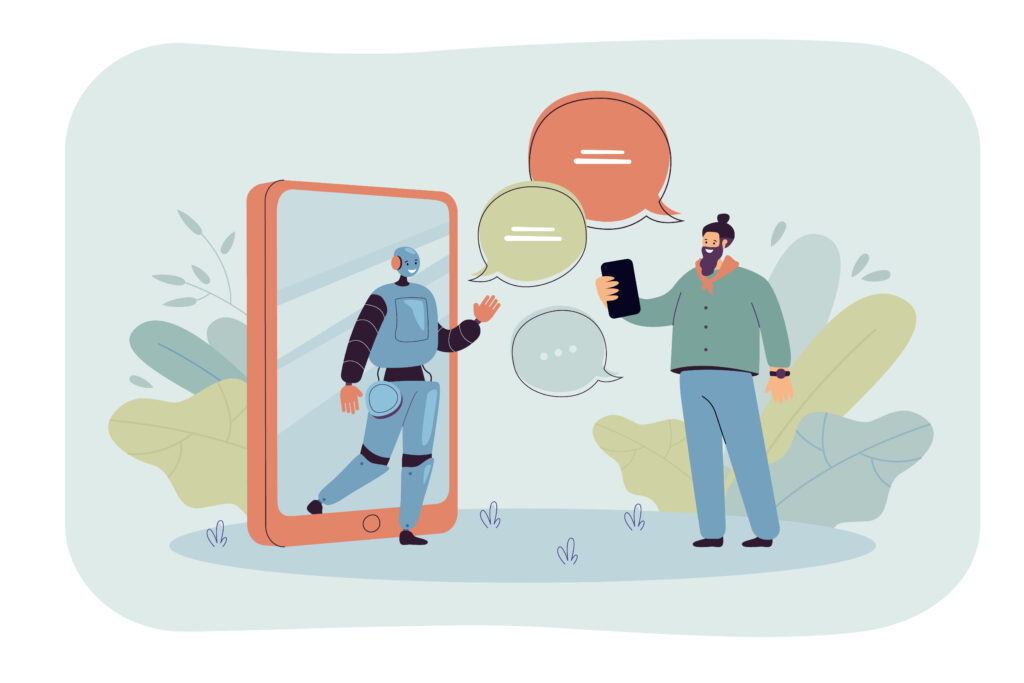
- Chatbots answer questions
- AI agents complete tasks
A chatbot helps you write an email.
An AI agent can write, edit, and send that email.
That is a big leap.
Key Takeaways
AI agents are not just smarter chatbots. They are systems that can take action and complete tasks. They observe, think, act, and improve. As AI evolves, these agents will become more common in both personal and business use.
Future of AI Agents
AI agents are moving fast.
In the next few years, you will likely see:
- Fully automated workflows
- AI handling daily tasks end to end
- Businesses relying heavily on AI agents
- Personal AI assistants becoming more advanced
The shift is clear. AI is moving from answering to doing.
What This Means for You
Beginners
You do not need technical skills to start using AI agents. Many tools are becoming simple and user-friendly.
Professionals
AI agents can save time by automating repetitive tasks. This improves productivity and efficiency.
Businesses
AI agents can reduce costs, improve speed, and scale operations. Companies that adopt early will have an advantage.
Conclusion
AI agents are changing how we interact with technology.
They are not just tools that respond. They are systems that can act, decide, and complete tasks for you.
For beginners, this means simpler and smarter tools. For professionals and businesses, it means higher productivity and automation.
If you understand AI agents today, you are already ahead of where the market is going.
FAQs
-
What are AI agents used for?
They are used for automation, productivity, research, and business workflows.
-
Are AI agents the future of AI?
Yes. AI is moving toward systems that can act independently rather than just respond.
-
Can beginners use AI agents?
Yes. Many tools are designed to be simple and easy to use.
-
What is a general purpose AI agent?
It is an AI system that can handle multiple types of tasks instead of focusing on one specific function.