
Introduction
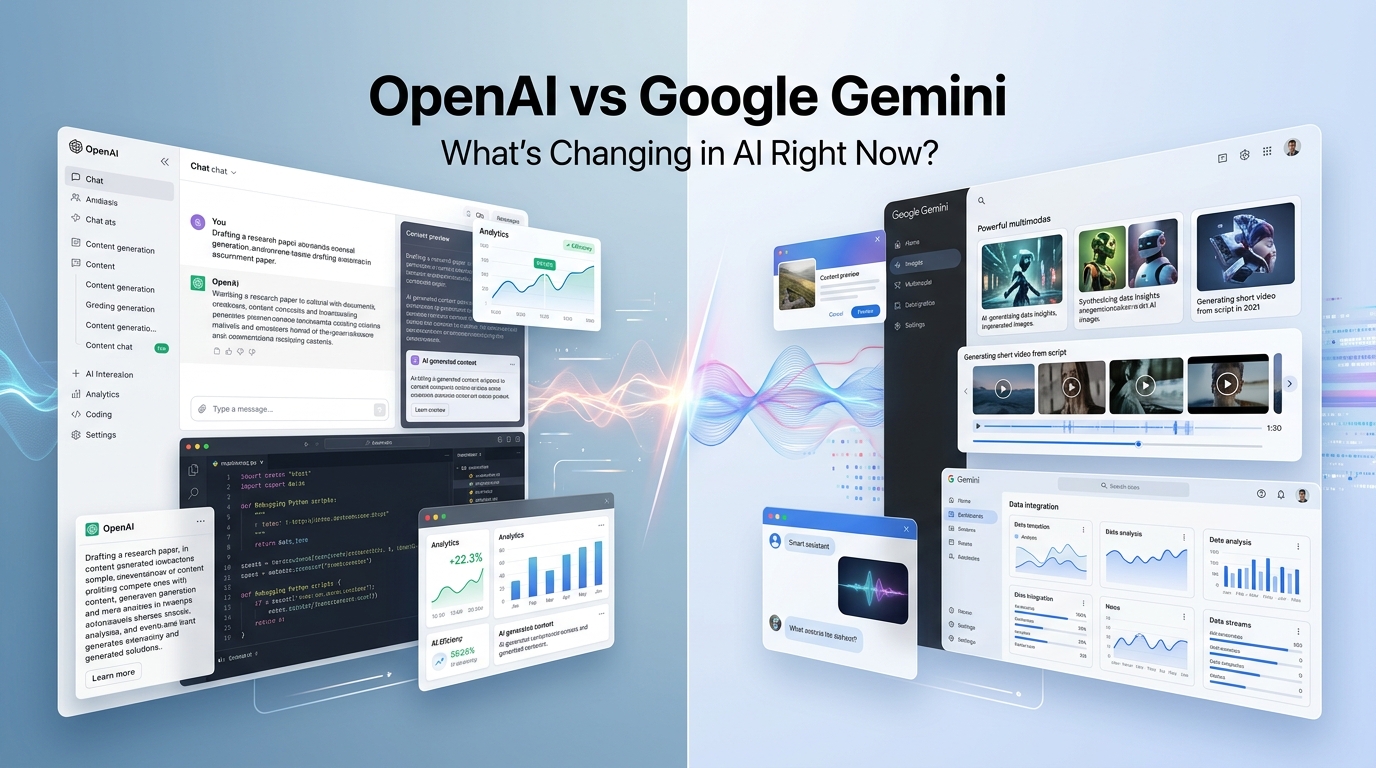
The AI race is no longer quiet. It is a full-scale competition between two of the biggest forces in technology, OpenAI and Google.
On one side, you have OpenAI, the company behind ChatGPT, which helped bring AI into everyday life. On the other side is Google Gemini, Google’s answer to the generative AI revolution.
So what is really happening here? And more importantly, how does this battle affect you?
In this article, we will break down the OpenAI vs Google Gemini competition in simple terms, explore key differences, and explain what is changing in AI right now.
Quick Answer
In short, the OpenAI vs Google Gemini battle is shaping the future of AI. OpenAI leads in usability and ecosystem, while Google Gemini is catching up fast with deep integration across Google products and strong research capabilities.
Table of Contents
Understanding the AI Battle
To understand google gemini vs openai, you need to look at their core strategies.
OpenAI moved first. ChatGPT became the fastest-growing consumer application in history, introducing millions of users to AI.
Google responded with Gemini, integrating AI directly into its existing ecosystem, including Search, Gmail, Docs, and Android.
This created two different approaches:
- OpenAI builds standalone AI tools
- Google embeds AI into everything you already use
This difference is shaping how AI evolves in 2026.
OpenAI vs Google Gemini: Key Differences
1. User Experience
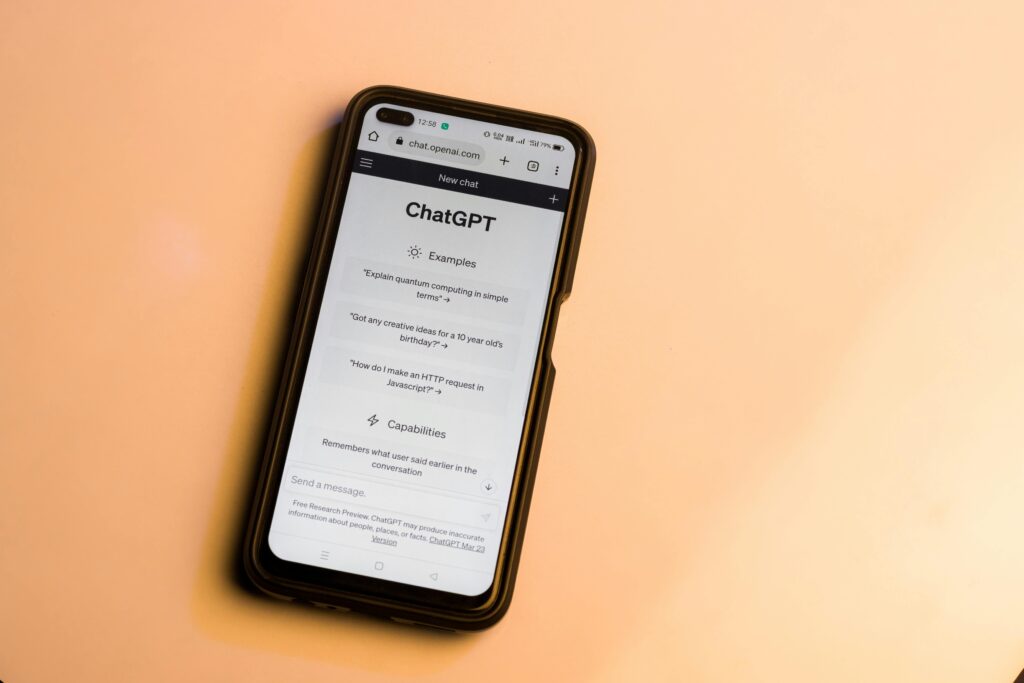
OpenAI focuses on simplicity. ChatGPT is easy to use and works for almost any task.
Google Gemini, on the other hand, blends into tools people already use. You may not even notice you are using AI.
Result:
ChatGPT feels like a tool
Gemini feels like a system
2. Ecosystem Power
This is where Google has a strong advantage.
Gemini connects with:
- Google Search
- Gmail
- Google Docs
- YouTube
- Android
OpenAI is building its ecosystem through plugins, APIs, and enterprise tools, but Google already has billions of users across its products.
This makes google gemini vs openai chatgpt a very close competition.
3. Performance and Capabilities
Both are powerful, but they excel in different areas.
- OpenAI is strong in:
- Writing
- Coding
- General use
- Google Gemini is strong in:
- Real-time data
- Research
- Multimodal understanding
This shows that the competition is not about who is better overall, but who is better at specific tasks.
4. Speed of Innovation
OpenAI moves fast. It releases updates, features, and improvements at a rapid pace.
Google moves more cautiously but integrates deeply once features are ready.
Two different strategies:
- OpenAI = fast iteration
- Google = ecosystem integration
Real-World Impact
This competition is not just about companies. It is changing how people use technology.
For Users
You now have more choices than ever. You can pick the tool that fits your needs.
For Professionals
AI is becoming part of daily workflows. Writing, research, and automation are faster.
For Businesses
Companies are building AI-powered systems using both OpenAI and Google technologies.
The result is simple. AI is no longer optional.
Pros and Cons
OpenAI
Pros
- Easy to use
- Versatile
- Strong developer ecosystem
Cons
- Limited native integrations compared to Google
- Sometimes lacks real-time data
Google Gemini
Pros
- Deep integration with Google tools
- Strong in research and real-time information
- Massive user base
Cons
- Less flexible as a standalone tool
- Still evolving in some areas
Key Takeaways
The OpenAI vs Google Gemini competition is driving rapid innovation in AI. OpenAI leads in usability and flexibility, while Google leads in integration and ecosystem. The future of AI will likely combine both approaches.
What’s Changing in AI Right Now
This is the most important part.
AI is shifting in three major ways:
1. From Tools to Systems
AI is no longer just a tool you open. It is becoming part of everything you use.
2. From Answers to Actions
AI is moving beyond answering questions. It is starting to take actions and automate tasks.
3. From Single Platform to Multi-AI Use
People are using multiple AI tools instead of relying on just one.
This shift is directly driven by the OpenAI vs Google Gemini competition.
What This Means for You
Beginners
You can start with ChatGPT or Gemini. Both are powerful and easy to use.
Professionals
Using both platforms will give you better results than relying on one.
Businesses
The smartest strategy is to build systems that combine multiple AI platforms.
Conclusion
The OpenAI vs Google Gemini battle is not just about competition. It is about transformation.
OpenAI changed how we interact with AI. Google is changing how AI fits into our daily tools.
Together, they are pushing AI forward faster than ever.
The real opportunity is not choosing one over the other. It is understanding how to use both effectively.
FAQs
-
What is Google Gemini used for?
Google Gemini is used for AI-powered search, productivity tools, and integrations across Google services like Gmail, Docs, and Android.
-
Which one is better, OpenAI or Gemini?
It depends on your needs. OpenAI is better for ease of use and versatility, while Google Gemini is stronger in real-time data and deep integration with Google products.
-
Which AI is fully free?
Both OpenAI and Google Gemini offer free versions, but with limitations. Advanced features, faster responses, and premium models are usually available through paid plans.
-
Who is the fastest growing AI company?
OpenAI is widely considered one of the fastest-growing AI companies due to the rapid adoption of ChatGPT. It reached millions of users in record time and continues to expand its user base globally.